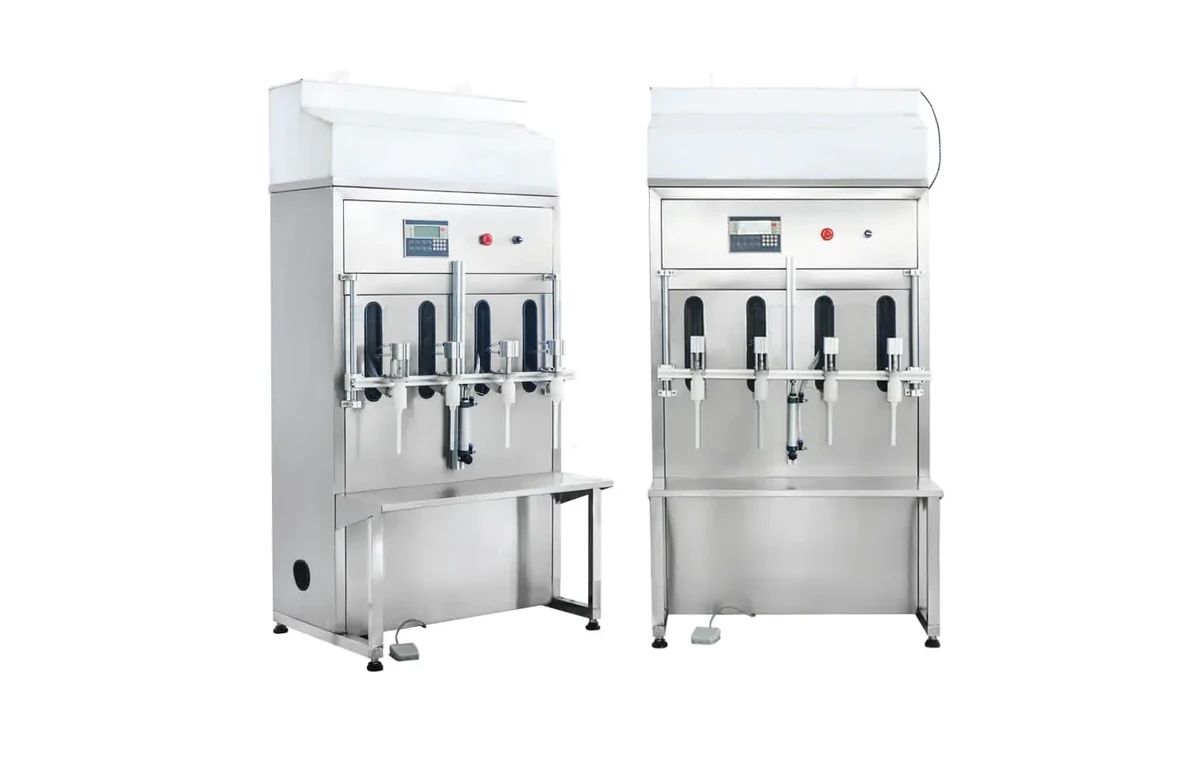
Automatic anti-corrosion filling
For repeated production where a conveyor-fed, multi-head system can be built around compatible product-contact materials.
Read moreAnti-corrosion filling
Corrosive liquid filling projects are driven by wetted material compatibility. The pump, valves, nozzles, hoses, seals, tank, frame environment and cleaning method must be reviewed before a machine style is selected.
Specification
A corrosive filler should not be specified from fill volume alone. A liquid that attacks one seal, hose or valve material may be perfectly manageable with another, so product data and compatibility history are central to the brief.
Choose your equipment
Choose equipment from product compatibility and container handling.
For repeated production where a conveyor-fed, multi-head system can be built around compatible product-contact materials.
Read more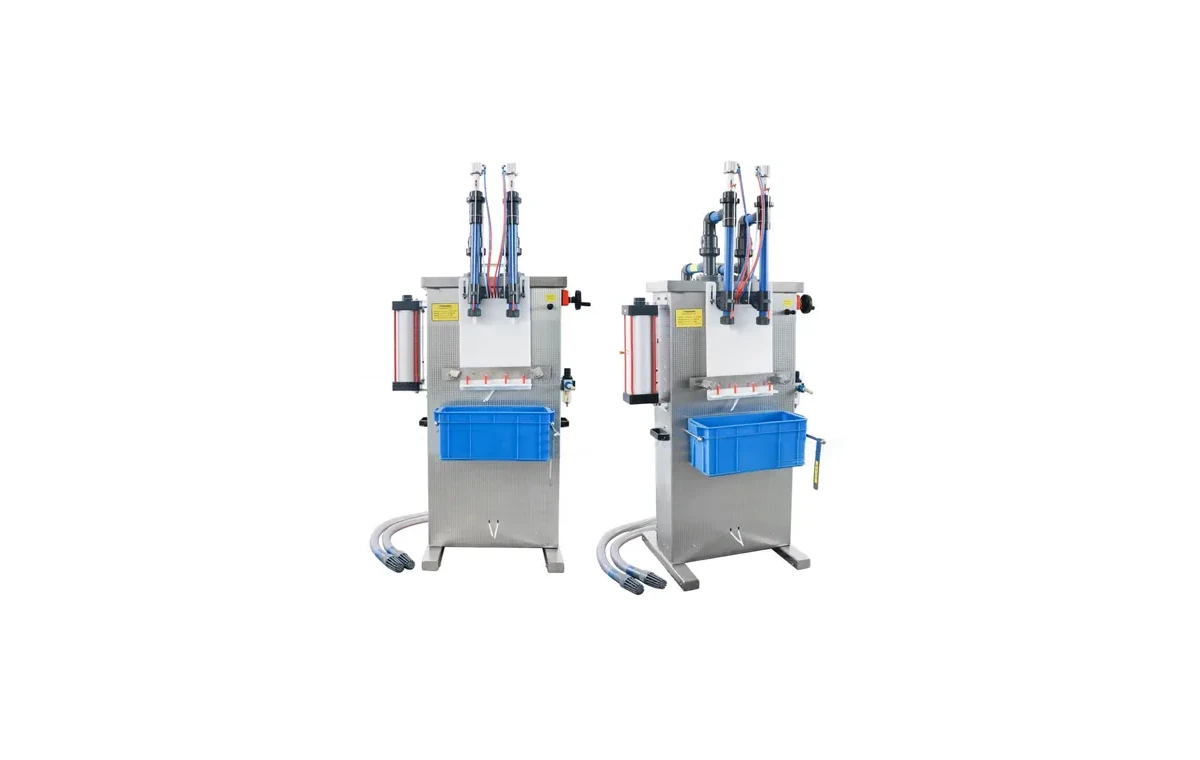
For shorter batches or growing production where controlled dosing is needed but full automation is not yet justified.
Read more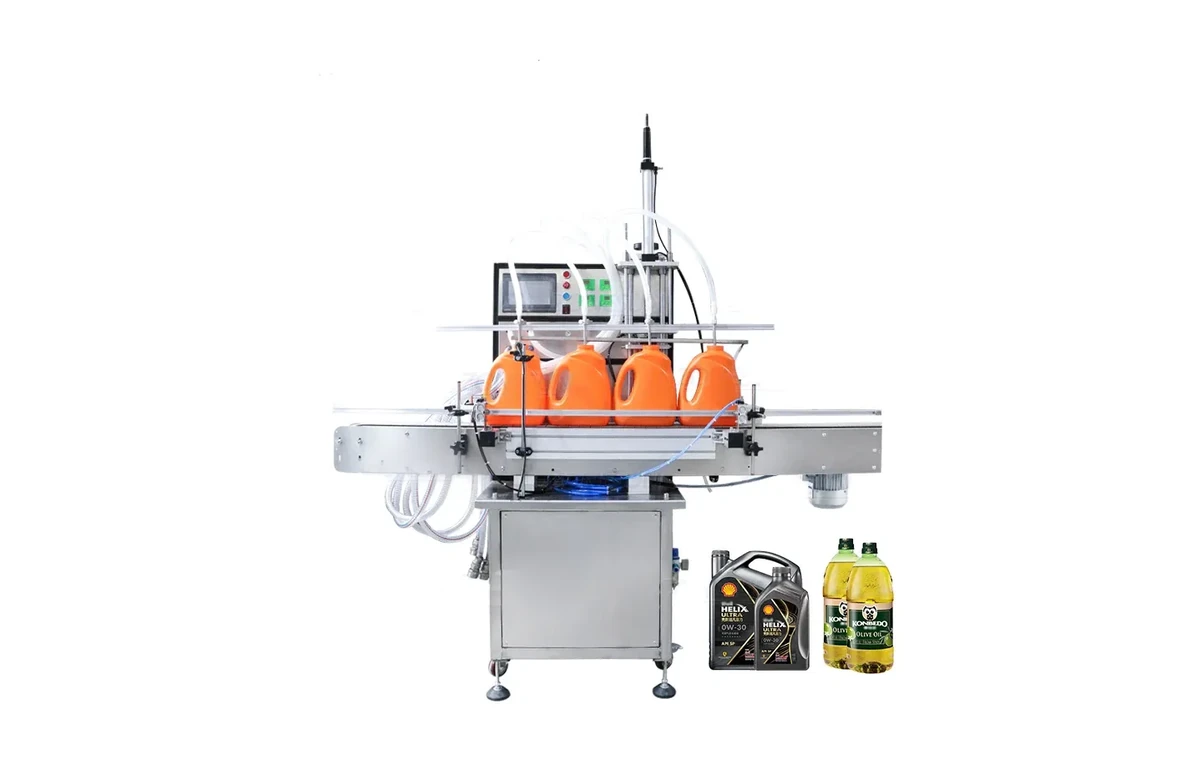
For foaming cleaning products that may also need corrosion-aware materials and controlled fill profiles.
Read more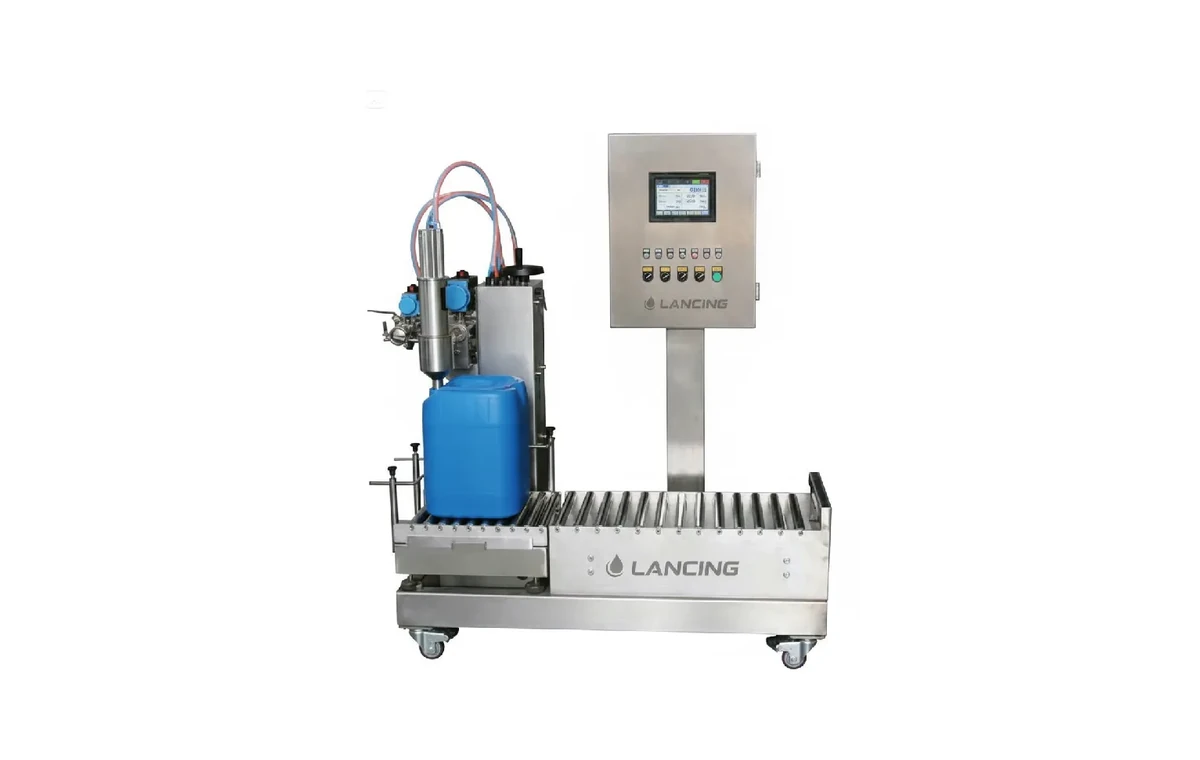
For larger chemical containers where weight control, drip control and operator ergonomics need attention.
Read moreComparison
| Detail | Why it matters | Example |
|---|---|---|
| Chemical family | Identifies likely compatibility risks | Acid, alkali, bleach, fertiliser, descaler |
| Known compatible materials | Avoids unsuitable wetted parts | PP, PVC, PTFE, specific elastomers |
| Fill size | Determines pump and container handling | 250ml bottle to 25L jerrycan |
| Foaming or fumes | Affects nozzle, extraction and fill profile | Diving nozzle, slower fill, environment review |
| Closure style | Leak control depends on cap and seal | Screw cap, trigger, pump, induction seal |
Note
For aggressive liquids, an enquiry is stronger when it includes the SDS, concentration, temperature, fill volume, target output and any materials already proven in the production process.
FAQ
Materials depend on the liquid. Projects may use selected plastics, hoses, seals and non-metal wetted parts, but the correct choice should be confirmed against the product data.
Yes, bleach-based products are a common reason to review anti-corrosion filling options, but concentration and compatibility details are still needed.
Yes. Automatic anti-corrosion options can be considered when the product, container, closure and production volume justify conveyor-fed filling.
Speak to Lancing
Send the product, fill volume, container, closure and target output. Include SDS and compatibility notes where relevant.