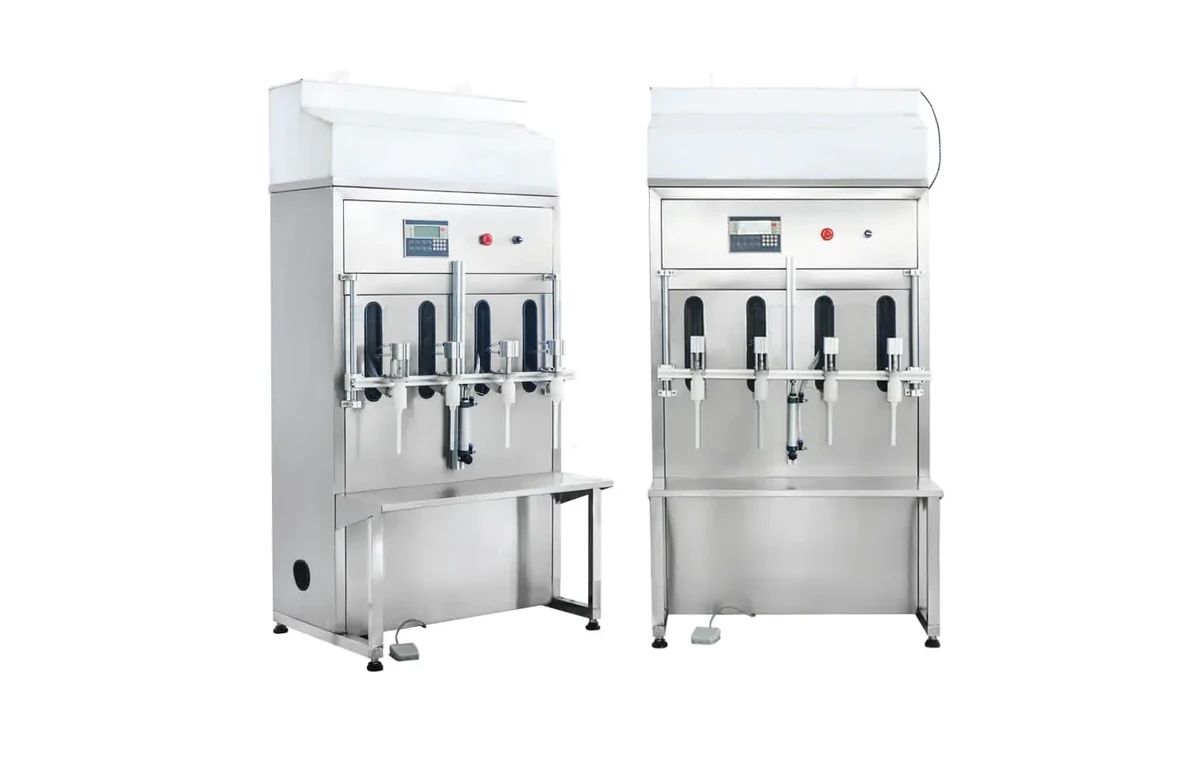
Anti-corrosion fillers
Plastic-contact filling options for bleach, acids, alkalis, fertilisers and aggressive cleaning liquids where stainless wetted parts are not suitable.
Read moreUK chemical filling machinery
Find the right filling, capping and line equipment for your chemical product. Start with your liquid, container, closure and output target, then build a practical shortlist for bottles, jerrycans, pails, cans or drums.
Choose your equipment
The right shortlist depends on how your product behaves, what it touches, the container size, the closure style and the output you need. Use the options below to get to the most relevant machinery faster.
Plastic-contact filling options for bleach, acids, alkalis, fertilisers and aggressive cleaning liquids where stainless wetted parts are not suitable.
Read more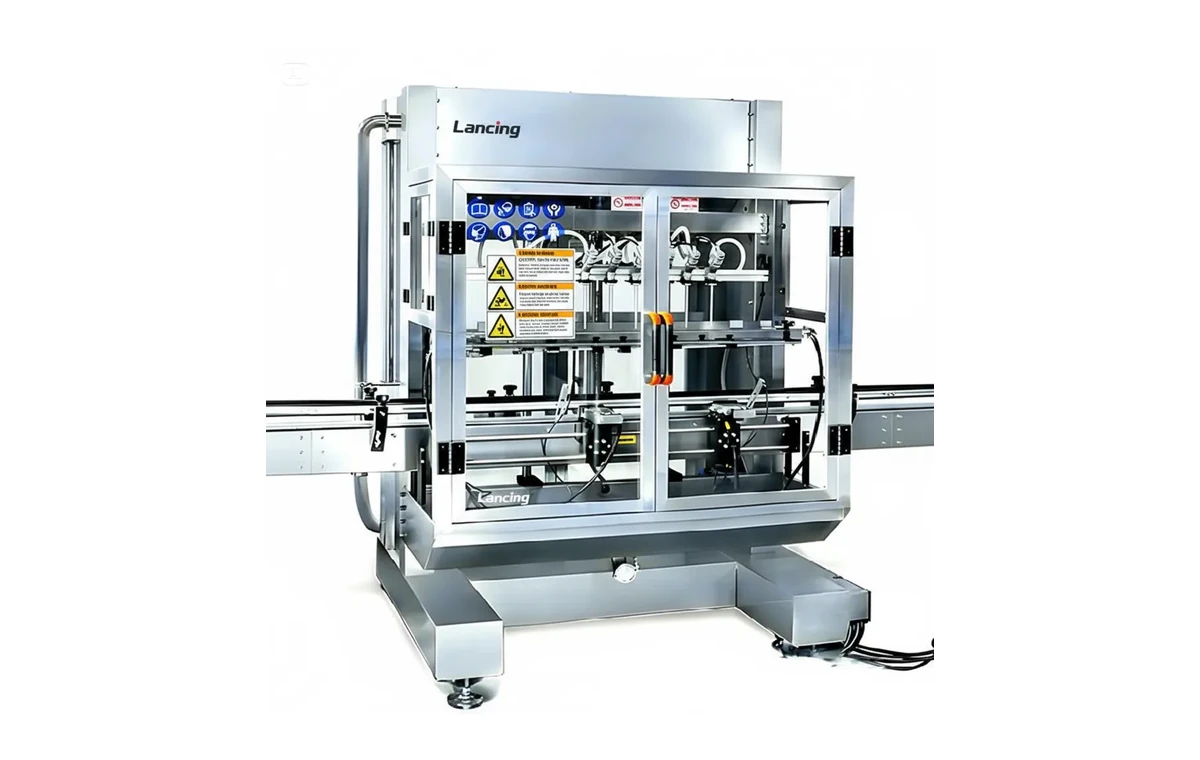
Filling machinery options for solvent, flammable or hazardous-area projects where the line must be considered alongside site zoning and product data.
Read more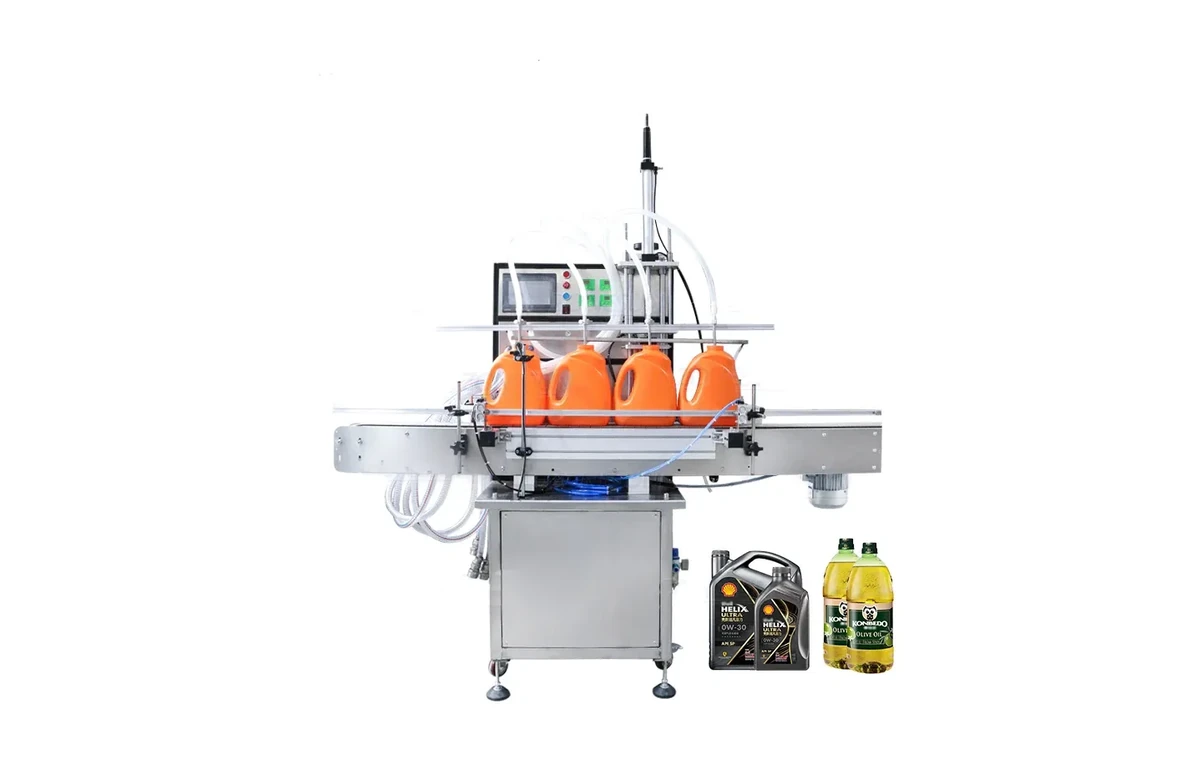
Semi-automatic and automatic filling options for foamy detergents, sanitisers, trigger-spray liquids, gels and household chemicals.
Read more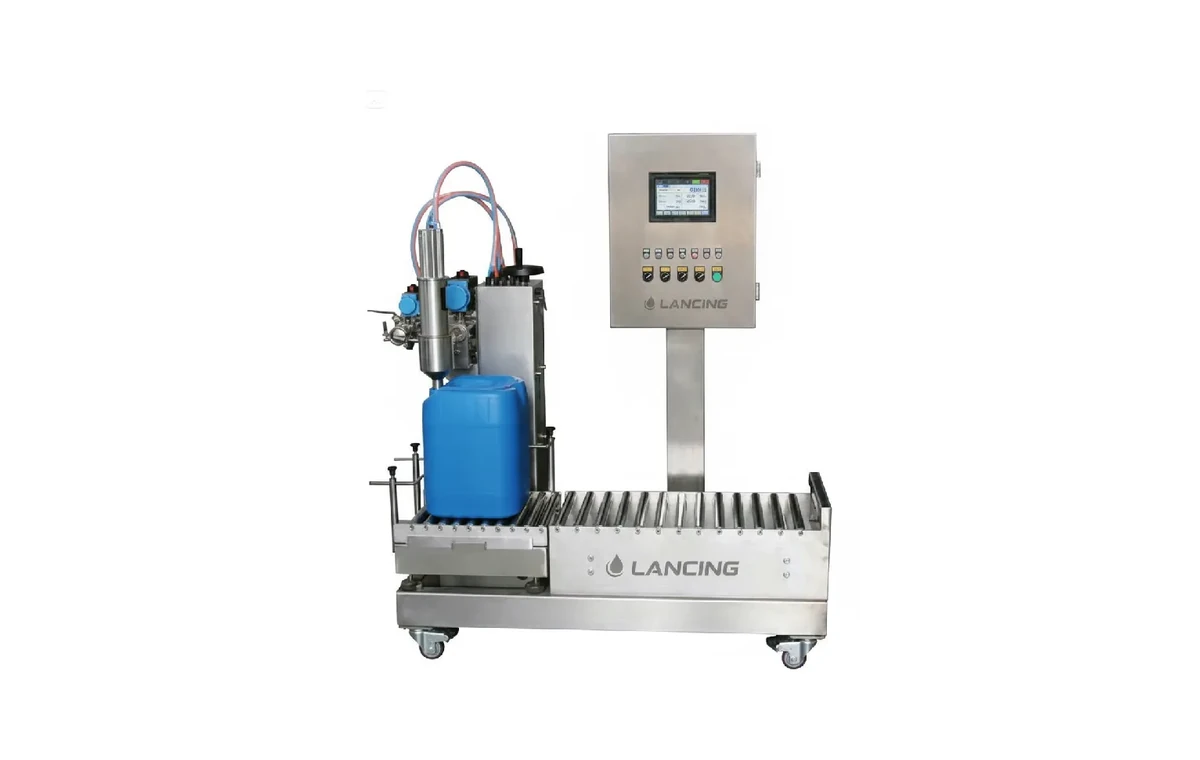
Weight, pump or flow-controlled filling options for 5L, 10L, 20L, 25L and larger industrial containers where handling matters as much as speed.
Read more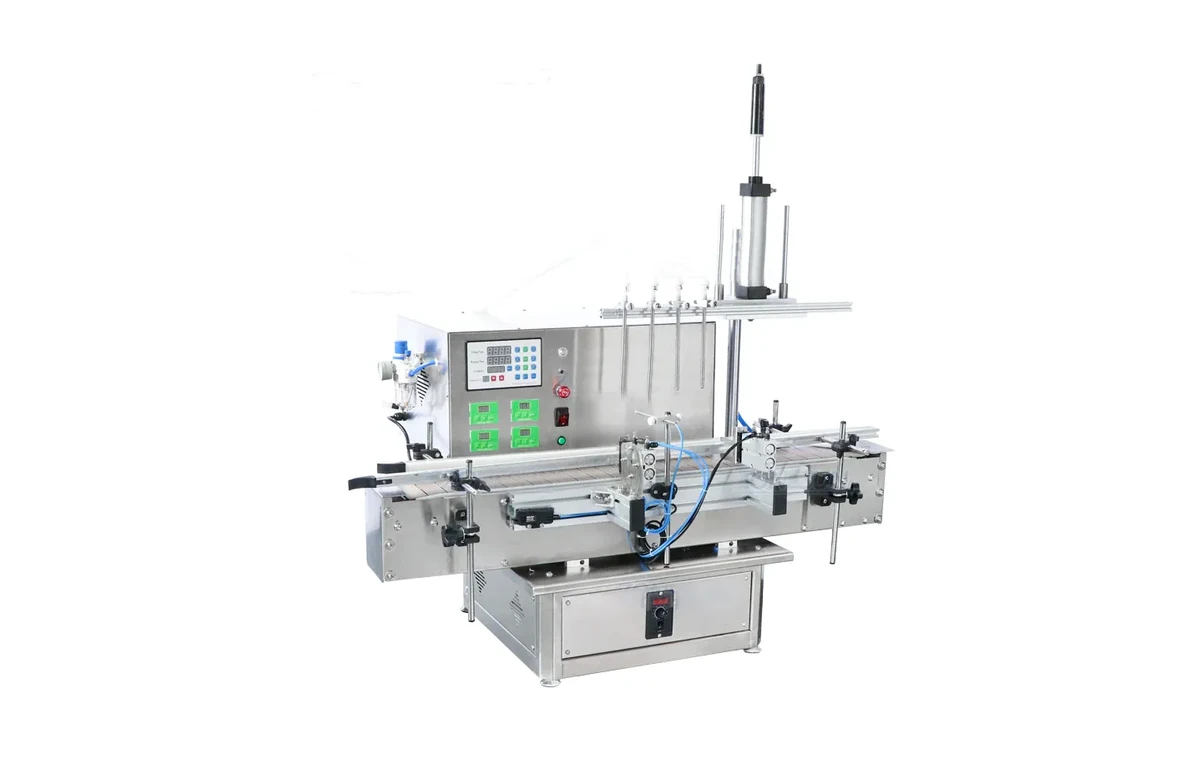
Project-led specification for low-viscosity specialist liquids, vapour considerations, splash control, fill accuracy and safer line layout.
Read more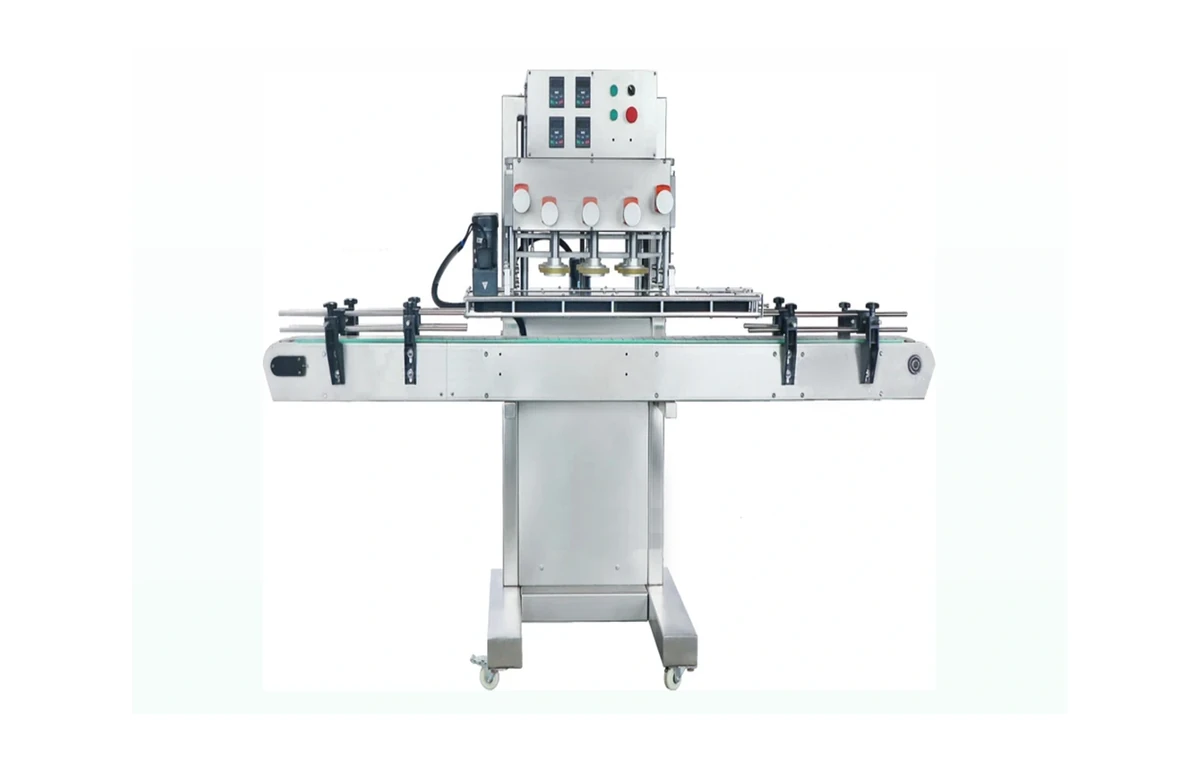
Screw caps, pumps, trigger sprays, ROPP closures, cap feeding and torque control specified around the filled chemical pack.
Read moreSpecification
Chemical liquids can be thin, foamy, aggressive, volatile, viscous or high-value. A useful specification starts with the product data, contact materials, fill size, container family and site constraints before discussing machine speed.
Choose your equipment
A chemical filling project can begin with a compact filler, grow into a semi-automatic bench or floor-standing system, or be specified as a complete automatic line.
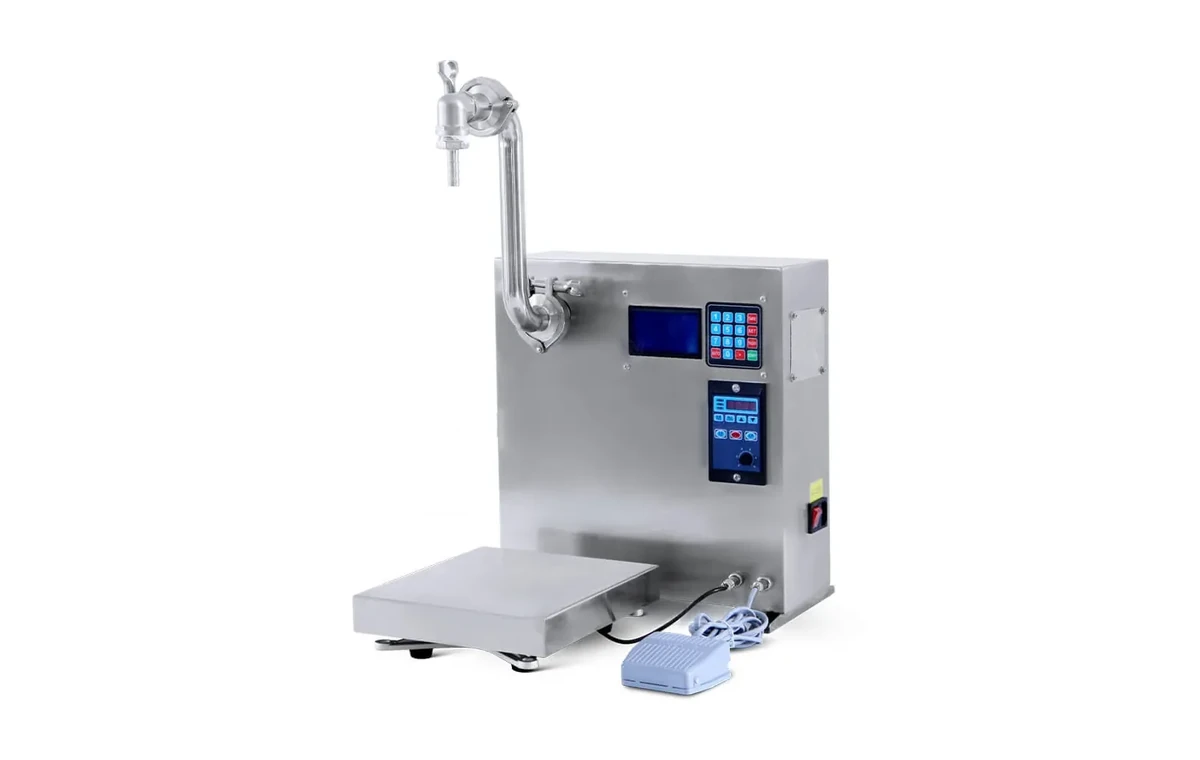
For pilot production, short runs, batch changeovers and growing manufacturers moving away from hand filling.
Read more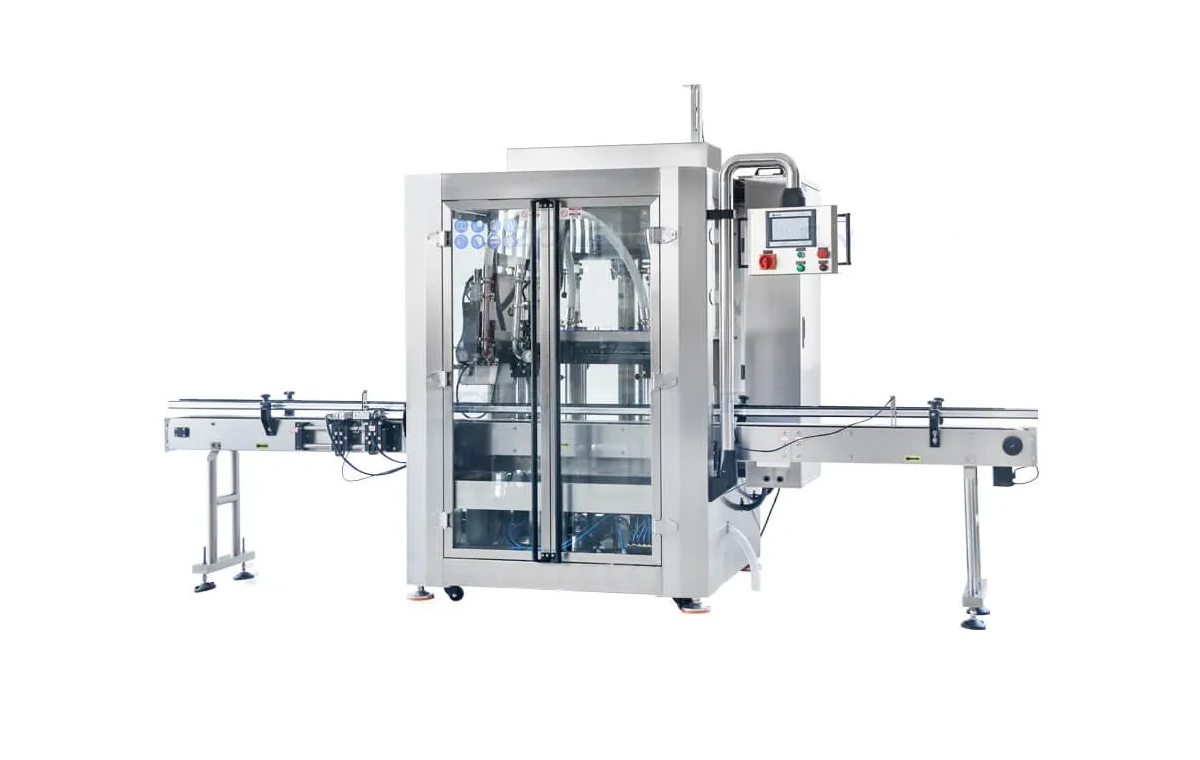
Inline multi-head systems for higher throughput, conveyor-fed containers, repeatable dosing and integrated fill-cap-label projects.
Read more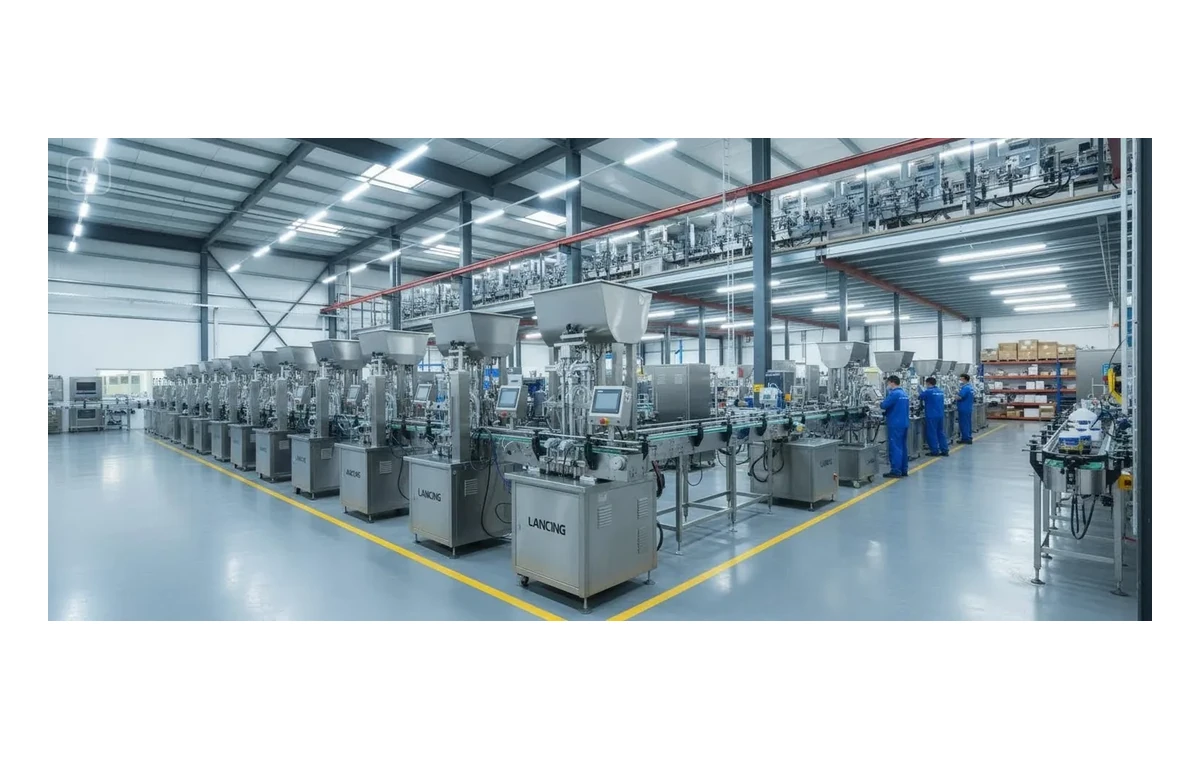
Filling, capping, labelling, coding, conveyors and accumulation planned as one working line rather than separate purchases.
Read moreProject details
Start with the product family and container you use today, then narrow the choice around compatibility, filling accuracy, changeover, capping and future production growth.
Process
Send SDS notes where relevant, viscosity, foaming behaviour, fill temperature, solids and compatibility concerns.
Share container photos, dimensions or samples, closure type, label application and target fill range.
State bottles per minute, containers per hour, batch sizes and future SKUs.
Compare filler, capper, conveyor, labeller, coding and installation requirements together.
FAQ
A chemical filling machine doses liquid chemicals into containers such as bottles, jerrycans, pails, tins or drums. The correct machine depends on viscosity, foaming, corrosiveness, flammability, container size and required output.
No. ATEX considerations depend on the liquid, vapour risk, flash point, installation area and site assessment. Solvent and flammable-liquid projects should be reviewed before a machine is specified.
Yes. Chemical filling projects often need capping, trigger or pump closure handling, labelling, coding, conveyors and line layout reviewed alongside the filler, so those details can be included in the same enquiry.
Send the product description, fill volume range, container and closure details, target output, accuracy requirements, site constraints and any compatibility or safety notes.
Speak to Lancing
Send the product, fill volume, container, closure and target output. Include SDS and compatibility notes where relevant.
Engineering the requirement
A useful machine shortlist starts with the conditions the filler must handle every day. Product chemistry, temperature, foam, vapour, fill range, container stability, cleaning and the surrounding production area all influence the correct route. The aim is not to force every liquid through one generic filler, but to define a controlled product path from bulk supply to a closed, saleable pack.
Provide the current safety data sheet, formulation or trade-name details, concentration range, density, viscosity, operating temperature and any known compatibility restrictions. An SDS is a valuable project input, but it is not a material-compatibility approval or a workplace risk assessment. Wetted metals, plastics, elastomers, hoses, pumps and nozzle seals must be reviewed for the actual formulation and duty.
Products described as “acid”, “detergent” or “solvent” can behave very differently. Concentration, additives, temperature, aeration and cleaning chemicals may change both the filling method and the materials required. Where uncertainty remains, representative product trials and written component-supplier confirmation should form part of the approval route.
Selection framework
| Project characteristic | Routes commonly compared | What must be proved |
|---|---|---|
| Corrosive or chemically aggressive liquid | Plastic-contact pneumatic, diaphragm or peristaltic routes; compatible weigh or flow systems where appropriate | Full wetted-path compatibility, seal and hose life, safe drainage, clean cut-off and spill response |
| Foamy detergent or cleaner | Controlled-flow diaphragm, piston, pump or weigh filling with diving or bottom-up nozzles | Foam height, settled fill, nozzle movement, cycle time, headspace and clean changeover |
| Low-viscosity solvent or volatile liquid | Project-specific pneumatic, peristaltic, flow or weigh filling | DSEAR information, area classification, ignition control, vapour management, bonding/earthing and compatible contact parts |
| Jerrycan, pail or drum | Weigh filling, large-volume pump filling or controlled semi-automatic filling | Container handling, tare variation, nozzle reach, splash control, finished-pack movement and operator access |
| Automatic bottle line | Multi-head pump, volumetric, peristaltic, flow or weigh filling integrated with conveyors | Sustained good output, bottle control, line balance, fault recovery, cap and label quality and acceptance test criteria |
The routes above are selection prompts, not blanket compatibility or compliance claims. Final equipment and materials must be confirmed against the approved product, samples, site assessment and project specification.
Keep specialist intent with the right Lancing site
For a broader comparison of liquid dosing technologies, visit Lancing liquid filling machinery. Projects that are specifically about classified areas and explosion-protected equipment should continue through the dedicated ATEX filling machine site. Detailed automatic-machine comparisons belong on Automatic Filling Machines UK, while complete-line integration and acceptance planning are covered by Packaging Lines UK.
Define the next step
Include the SDS where relevant, representative containers and closures, fill range, output target, cleaning requirement and any available site or hazardous-area information.
Decision-ready specification
A useful proposal should show how the product, container, closure, production target and site conditions lead to the selected filling route. Keeping that evidence in one controlled brief makes quotations easier to compare and reduces the risk of discovering a material, handling or safety constraint after the machine layout has been fixed.
| Evidence group | Decision it supports | What to record |
|---|---|---|
| Product operating envelope | Wetted path, pump, meter, nozzle and cleaning route | Exact formulation or trade name, concentration, SDS, density, viscosity, temperature, foam, solids and known material restrictions |
| Pack operating envelope | Container control, nozzle reach, fill profile, capping and labelling | Drawings or samples for every bottle, jerrycan, pail or drum, including neck, handle, closure, label panel and empty/filled mass |
| Production duty | Manual, semi-automatic or automatic architecture | Required good packs per period, batch sizes, shifts, replenishment tasks, planned stops, changeovers and future formats |
| Site interfaces | Layout, utilities, containment, extraction, guarding and installation boundary | Bulk supply, floor plan, access, power, air, drainage, waste route, environmental conditions and any DSEAR or hazardous-area information |
| Acceptance evidence | How suitability will be demonstrated before and after installation | Representative products and packs, trial matrix, measured quality checks, FAT/SAT responsibilities, documents and open-action close-out |
Representative testing
A single container filled from a full, settled product vessel does not represent a production campaign. The trial should include the smallest and largest agreed dose, the least stable pack, the formulation or temperature most likely to foam, a restart after a realistic pause and the expected low-level condition in the bulk supply. Where cleaning or product change is important, the trial plan should also identify how retained product, rinse fluid and the first acceptable pack will be assessed.
Record the product batch, container and closure versions, machine configuration, settings and measurement method so that the result can be repeated. A successful demonstration is more valuable when the same evidence becomes the basis of the order specification and factory acceptance test.
Prepare the evidence
Include representative samples and identify which requirements are confirmed, assumed or still need to be proved by trial.
Engineering resources
The strongest enquiries define more than the liquid and target volume. They show which requirements are fixed, which assumptions remain open and how compatibility, fill quantity, closure quality, site interfaces and acceptance will be proved. The following engineering resources organise that work without replacing a product trial, supplier review or competent site risk assessment.
Build a testable user requirement specification covering products, packs, materials, controls, cleaning, safety interfaces, FAT, SAT and handover.
Separate machine repeatability from the packer’s legal and quality-control system, then define measurement, targets, sampling and corrective action.
Plan evidence for neck cleanliness, closure application, torque, liners, seals, leak resistance and realistic handling after filling.
Review formulation, supplier, temperature, container, closure, cleaning, software and equipment changes before an approved process is altered.
Define installation checks, dry and wet commissioning, operator training, site acceptance, open actions and the route into controlled production.
Create a controlled register for requirements, drawings, materials, controls, manuals, test records, training, spares and configuration backups.
Commercial readiness
Send the exact product identity and current SDS where relevant, the fill range, representative containers and closures, required good output, batch and changeover pattern, product-supply arrangement, cleaning method, site layout and any hazardous-area information. Mark each item as confirmed, assumed or requiring a trial. That distinction prevents a preliminary suggestion from being mistaken for an approved production specification.
Where packaged quantity, closure integrity or operator exposure is critical, include the site’s proposed measurement and acceptance method. Machinery can then be discussed against the same evidence that will later be used at FAT, SAT and routine production.
Qualified enquiry
Use the same product, packs, assumptions and acceptance language for the quotation, trial and order specification.
Questions buyers ask first
These answers are written for early project definition. Final machine suitability depends on the actual formulation, packs, site conditions and representative testing.
Compare quotations against one controlled duty: the same products, fill ranges, containers, closures, target good-pack output, utilities, cleaning method and site interfaces. Without that common basis, a lower price may simply reflect omitted pumps, format parts, extraction interfaces, controls, guarding, trials or commissioning rather than an equivalent solution.
Issue an assumption register with the enquiry and ask each supplier to state exclusions, evidence needed and the conditions under which the proposed route was selected. The chemical filling URS guide provides a practical structure.
A filling machine can complete its dosing cycle quickly while the complete line loses output through container loading, cap replenishment, unstable packs, label faults, cleaning, changeovers or rejected products. The useful measure is accepted finished packs over a representative period, not the theoretical stroke rate of one station.
Define normal operator tasks and connected equipment in the acceptance run. Record planned stops, micro-stops, rejects and recovery time so the limiting interface can be identified rather than hidden by a headline speed.
Provide representative product, empty containers, closures, liners and labels from the production supply chain. Include the current safety data sheet where relevant, pack drawings or measured dimensions, fill targets, density and viscosity at the expected fill temperature, and examples of the smallest and largest tolerated packs.
Do not send hazardous material until handling, quantity, transport, return or disposal and trial scope have been agreed. Photographs and drawings can start the discussion, but physical tolerances, neck finish, bottle flexibility and closure behaviour often need real samples.
Specify the stations together when the quality of one operation changes the next. Neck contamination can affect cap seating and label adhesion; bottle squeeze can affect torque; conveyor spacing can affect fill recovery and label presentation; and reject logic must identify the actual finished pack.
A single process sequence also clarifies controls ownership, accumulation, line stops, guarding, coding, inspection and handover. Use the chemical filling, capping and labelling line guide when the required output is a complete accepted pack rather than an isolated fill.
Speak to Lancing
Include the product family, SDS where relevant, pack samples, closure, fill range, target good-pack output and the production environment.